
TAC Sponsor Spotlight Article — City of Montréal
As the City of Montreal has changed and evolved over the years, its citizens have time and again shown a great ability to adapt, particularly in facing the rigors of winter and the many challenges of urban mobility. This adaptability has resulted in a wide range of transportation modes that coexist and complement one another.
With its cycling city and underground city, Montreal’s mobility has been shaped by a rich history of innovation. However, starting in the 1960s, like many other major urban centres, public transit and active mobility, which had been deeply anchored in our habits for decades, were gradually eroded with the increased use of the automobile.
Car-centered urban development brought concrete consequences: increased dependence on automobiles, congestion, pollution, sedentary lifestyles, lost time, high costs — both for households and the community — in addition to public safety challenges.
In a context of continued population growth in a limited urban space, it is imperative to rethink mobility and rebalance the use of our street space. The challenge is to do more with a road network that has a fixed footprint. Rediscovering a balance between different modes of transportation is essential, but this endeavour is not without its issues. For some, these changes may feel like a loss of reference points or even of identity, given how strongly the car is tied to personal and cultural identity.
The City’s commitment to rebalancing the use of public space has been expressed for many years in its plans and policies, notably the 2008 Transportation Plan. The new 2050 Land Use and Mobility Plan (PUM), approved in June 2025, reaffirms this commitment: to provide everyone with safe, sustainable travel options adapted to the challenges of today and tomorrow.
Re-sharing the street
Roadway redevelopment projects provide excellent opportunities to rethink and reallocate the use of public space. The aim is to create a balanced and inclusive urban environment in which every user, regardless of their chosen mode of transport, has their place. Successful reallocation of roadway use must offer citizens a diversity of mobility choices.
Re-sharing the street involves reviewing the space allocated to each mode of transport, in order to give active and public modes of transport their rightful place. It is not a question of excluding the car, but rather of reassessing its place in the urban fabric. In concrete terms, this reallocation means reducing the space dedicated to cars, which currently occupy more than 70% of road space[1], in favour of other uses. It also means improved safety for all users, which is always a key objective of any redevelopment project.
Using space to enhance safety
A number of measures are generally implemented to improve safety. These include reducing the width of traffic lanes, which encourages motorists to drive more cautiously and reduce their speed. Measures to improve mutual visibility are also favoured, such as curb extensions at intersections, which make pedestrians more visible and shorten their crossing distance. Where space allows, pedestrian safety islands are added to enable pedestrians to cross in two stages, which is particularly useful for people with reduced mobility who move more slowly. In short, reducing the space given over to cars frees up precious square metres of roadway that can be reallocated to enhance the safety of the most vulnerable road users.
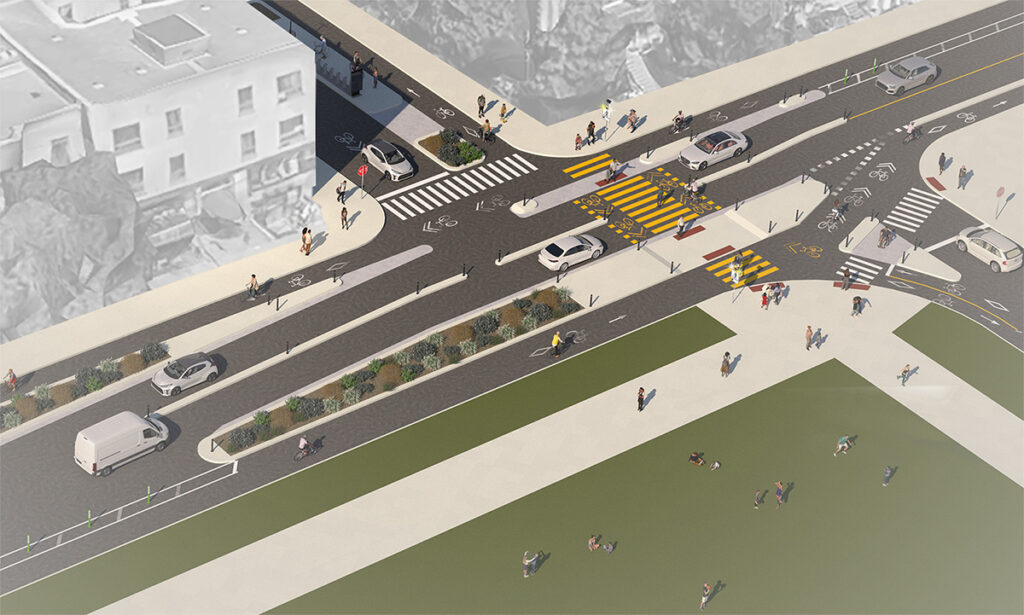
Figure 1: Planned redevelopment of Avenue Mont-Royal, between Rue Jeanne-Mance and Avenue de l’Esplanade
[1] Caractérisation du partage de la voirie à Montréal (Characterisation of road sharing in Montreal)
Using time to enhance safety
In addition to ground-level physical improvements, the use of time has proven to be a key factor in achieving enhanced roadway sharing. Changes in traffic light signal timing to give more time to pedestrians and cyclists is a traffic management measure that is widely used in Montreal.
An opportunity to support the ecological transition
Reducing greenhouse gas emissions and improving air quality requires shifting away from polluting modes of transport toward active and sustainable options such as walking, cycling, and public transit. For these to be feasible and appealing alternatives, they must be safe, efficient, and competitive with other modes of travel. Redefining street use also provides a significant added opportunity to accelerate ecological transition. New streetscapes can and should incorporate green infrastructure to better manage rainwater and reduce heat islands, thereby helping our cities adapt to climate change.
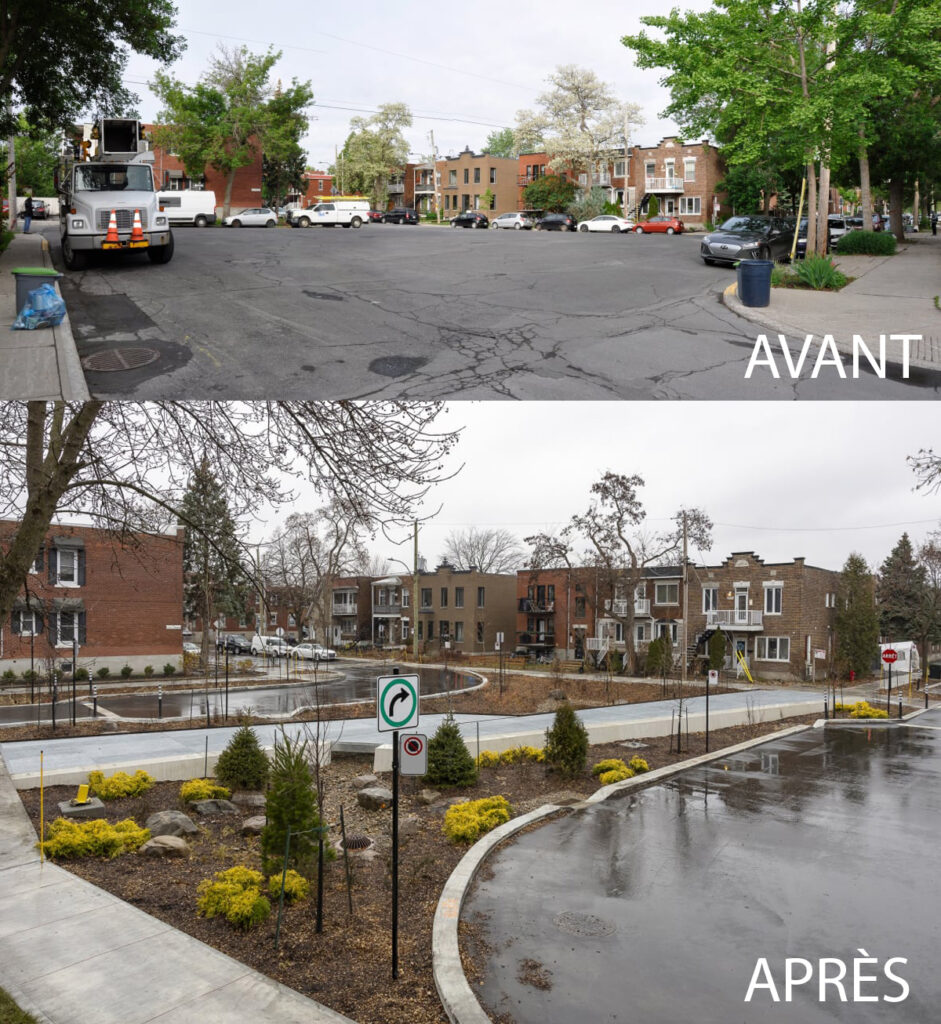
Figure 2: Redevelopment of Augier Square – before/after – Creation of a rain garden at the heart of the intersection
A street on a human scale
By placing comfort and accessibility at the heart of our planning thinking, we are promoting a better quality of life for the elderly, children, people with reduced mobility and the general population, for example, by integrating street furniture, offering obstacle-free routes and rest areas.
These transformations from the utilitarian, car-centred street to a balanced, green street where everyone has their place, strengthen the citizen’s ownership of public space and promote a healthier, fairer and more resilient city.
Implementation strategies
The strategy for implementing an urban redevelopment project can take several forms, including two main ones: complete reconstruction of the public right-of-way and surface-level development.
In the case of a complete reconstruction, the project generally stems from a need to completely rebuild the underground infrastructure. This provides an ideal opportunity to rethink the surface layout, rather than simply rebuilding what was there. Recent examples include the redevelopment of Avenue des Pins[1], Avenue Pierre-de-Coubertin[2], Rue de Champlain[3] and Carré Augier[4]. By contrast, a surface upgrade is a lighter intervention, often carried out with a view to rapid deployment. These projects focus on targeted roadway changes, with little or no work on the underground infrastructure. They make it possible to reallocate street space across longer linear stretches in a shorter timeframe. Recent examples include the redesign of Rue Saint-Denis[5], Avenue Christophe-Colomb[6] and Boulevard Henri-Bourassa[7].
[1] 27935_infolettre-3_ave_des_pins_2023_web_3.pdf
[2] Avenue Pierre-de-Coubertin – Phase 3 (Pierre-de-Coubertin Avenue – Phase 3)
[3] Projet rue De Champlain | Ville de Montréal (De Champlain Street Project | City of Montréal)
[4] Réaménagement du carré Augier | Ville de Montréal (Redevelopment of Augier Square | Ville de Montréal)
[5] Le REV : un réseau express vélo | Ville de Montréal (The REV: a bicycle express network | Ville de Montréal)
[6] Avenue Christophe-Colomb : aménagement de voies cyclables | Ville de Montréal (Avenue Christophe-Colomb: development of bicycle lanes | Ville de Montréal)
[7] Le boulevard Henri-Bourassa : bientôt un corridor de mobilité durable | Réalisons Montréal (Henri-Bourassa Boulevard: soon to be a sustainable mobility corridor | Réalisons Montréal)
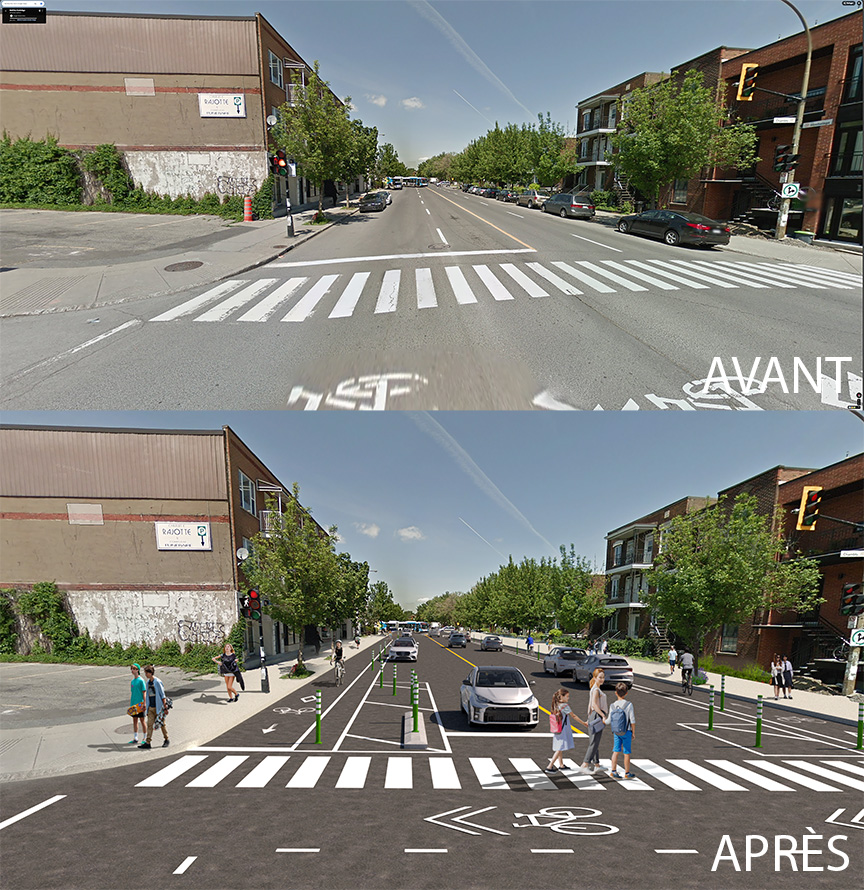
Figure 3: Proposed redevelopment of rue Hochelaga – before and after
A Multidisciplinary approach
Street redevelopment projects are complex initiatives requiring input from multiple disciplines and different municipal departments depending on the stage of the project. Project teams typically include engineers, urban planners, landscape architects, technical staff and graphic designers.
The complementary nature of engineering, urban planning and landscape architecture makes it possible to design projects that integrate mobility efficiency, safety, greenery, and a focus on user experience. The aim is to create friendly, harmonious streets that meet everyone’s needs.
Street design guidelines[1] are readily available and regularly updated. In Montreal, a dedicated team is responsible for updating these guidelines and creating new data sheets to support teams in planning and implementing projects.
Change management: How to involve citizens in urban transformation
Any change, particularly in the use of public space, inevitably sparks varied reactions from the community. To avoid surprises and minimize negative reactions, proactive and transparent communication is essential. Some projects have even succeeded in inviting citizens to help shape new designs, fostering collective ownership and buy-in.
Over the past few years, the City of Montreal has developed tools and mechanisms to improve stakeholder management and citizen communication. A specific strategy is put in place for each project, based on the scope of the project and the anticipated impact on local residents.

Figure 4: Example of a stakeholder management process
[1] Répertoire des pratiques d’aménagement de la rue (Directory of street design practices)
Conclusion
In its effort to reallocate public space, the City of Montreal faces challenges similar to those of many major North American urban centres.
Beyond our strong cultural attachment to cars, several practical challenges hinder reallocation: the logistical needs of a large city, such as delivery trucks, emergency vehicles, and snow removal equipment, sometimes make reducing space for cars difficult. Yet these constraints also present opportunities to innovate in street design, operations, and maintenance—for the benefit of all.
In this context, multimodality becomes essential: the same person may be a driver, pedestrian, cyclist, or scooter rider within a single day. This diversity of experiences fosters greater understanding among users and encourages more respectful, equitable sharing of public space.
Ultimately, re-sharing the street is an act of solidarity. It is not only about redistributing space but about building a more inclusive city where each of us can find our place.
Sharing is caring.