
 Manitoba’s transportation network depends on infrastructure that can perform under demanding conditions: long travel corridors, major river and rail crossings, aging assets, and increasingly complex climate and flood-related pressures. In that environment, Tetra Tech’s Manitoba transportation practice plays an important role in helping clients plan, assess, renew, and deliver the infrastructure that keeps communities connected across the province. Its capabilities span bridge and road design, structural inspection, rehabilitation, demolition, construction supervision, project management, and asset management, supported by digital and alternative delivery methods that help improve project outcomes over the full asset lifecycle.
Current Projects Reflecting Manitoba’s Infrastructure Priorities
That technical breadth is reflected in several of the province’s most significant current bridge and corridor projects. The Arlington Street Bridge replacement is one of the most visible examples. The bridge is being decommissioned and removed, with demolition underway as the first step toward replacement. Because the work is taking place in an active rail environment, the project requires careful staging, coordination, and design planning. The new bridge is intended to improve access for people walking, biking, taking transit, and driving, underscoring the growing expectation that major transportation infrastructure must serve multiple modes of travel.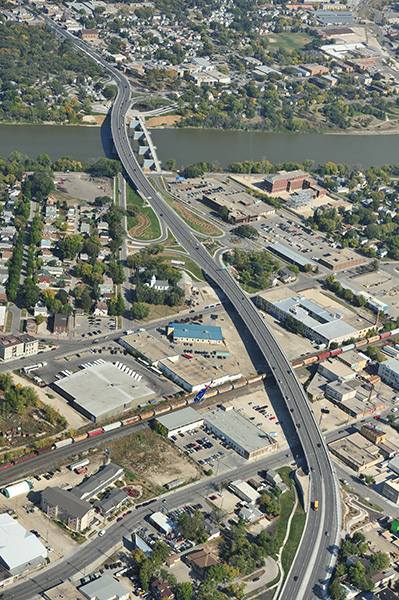
A legacy of Landmark Bridge Projects
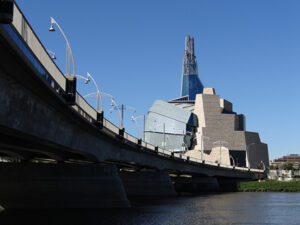
Tetra Tech’s Manitoba transportation story is also anchored in a strong project legacy. The Disraeli Bridges Project remains one of the province’s landmark transportation undertakings. This project is the largest bridge project in the organization’s history, involving two new bridge structures, roadworks, and a separate active-transportation bridge. Technically, Disraeli stands out for demonstrating how major bridge programs can combine structural renewal, traffic management, and multimodal connectivity in a complex urban setting.
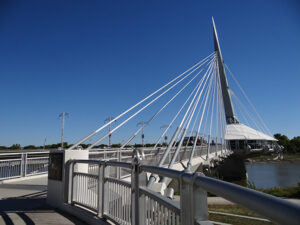
The Provencher Bridge and Esplanade Riel are equally significant. The Provencher Twin Bridges were completed in 2003, and the pedestrian walkway was named Esplanade Riel in the same year. The project is a strong example of bridge design that delivers practical transportation function while also contributing to civic identity and the public realm. For Manitoba, it remains a visible reminder that infrastructure can be both technically effective and publicly celebrated.
Innovation Supporting Delivery
Innovation is increasingly central to how these projects are delivered. Tetra Tech’s Manitoba transportation practice highlights the use of 3D modeling, predictive asset management, drone imaging, thermal imaging, rope access, and underwater inspection techniques. These tools can improve understanding of conditions, support prioritization, and reduce risk in projects involving large bridge inventories and constrained capital budgets.
 Looking Ahead
In Manitoba, the transportation challenge is not simply about replacing or repairing aging assets. It is to build infrastructure that is durable, adaptable, and capable of supporting the province’s long-term economic and community needs. From Arlington and Louise to Lagimodiere/Concordia, and from Disraeli to Provencher and Esplanade Riel, Tetra Tech Manitoba’s work reflects the full scope of modern transportation engineering: technical rigour, resilience, multimodal thinking, and a commitment to infrastructure that will serve the province well into the future.